Music / Styles A–Z / Africa, Europe and Asia · 28 of 35
Flamenco
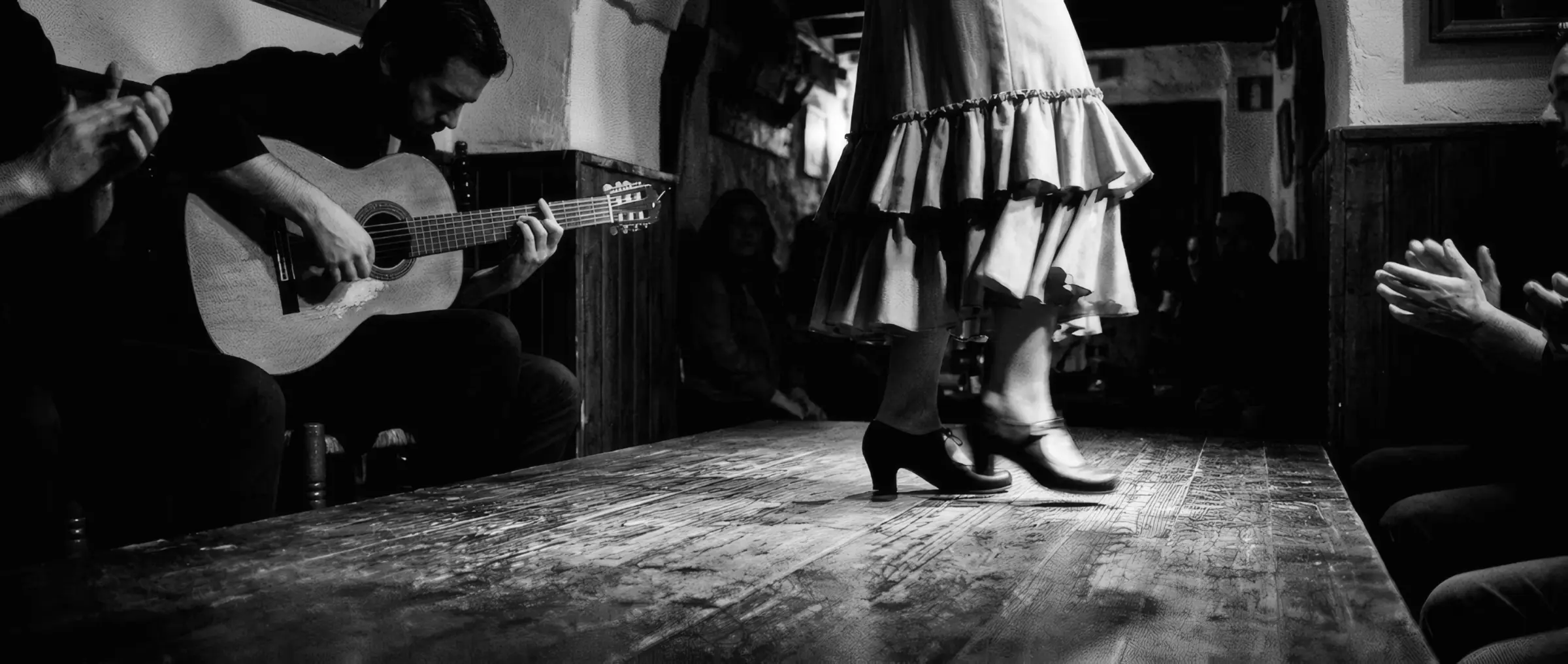
Flamenco grew from the folk music of southern Spain within the gitano culture of Andalusia and took shape in the late 18th century: song, guitar, dance, handclaps and rhythm cycles.
- Where and when
- Andalusia, Spain, late 18th century
- Tempo
- Depends on the palo: alegrías 120–170 BPM; bulerías fast
- Played on
- Voice, guitar, handclaps, footwork, castanets, cajón
What it is
Flamenco grew from the folk music of southern Spain within the gitano culture of Andalusia, and took shape in the late 18th century. It is regarded as a complex musical system: song, guitar, dance, rhythm cycles called compás, modal and tonal harmony, guitar interludes called falsetas, handclaps, footwork and improvised ornament. Its styles, the palos, number more than 50.
For the producer. The guitarist's introduction sets the key, the compás and the tempo for the singer. Tempo depends on the palo: alegrías usually run at 120 to 170 BPM, and bulerías is fast, on a 12-beat cycle. "Entre dos aguas" is a rumba with bongos and electric bass, proof that flamenco takes other instruments well.
The records that made it
From the lesson Africa, Europe and Asia, where the sources are listed · links open a search
- Entre dos aguasPaco de Lucía · His best-known piece, from the album Fuente y caudal.
- 1981Friday Night in San FranciscoPaco de Lucía with the Guitar Trio · Sold over a million copies.
- 1989Soy GitanoCamarón de la Isla · Recorded with the Royal Philharmonic Orchestra and Tomatito.
Flamenco in this month’s records
New releases the press we read wrote about, tagged flamenco on MusicBrainz · updated with every build
No new record in the press we read is tagged flamenco this month. The list fills as records come out.