Studio / Record anywhere / 01 · Bedroom
Vocals in a bedroom
Most good home vocals are made in a bedroom. The trick is not the microphone: it is the duvet, the distance and the fridge you remembered to switch off.
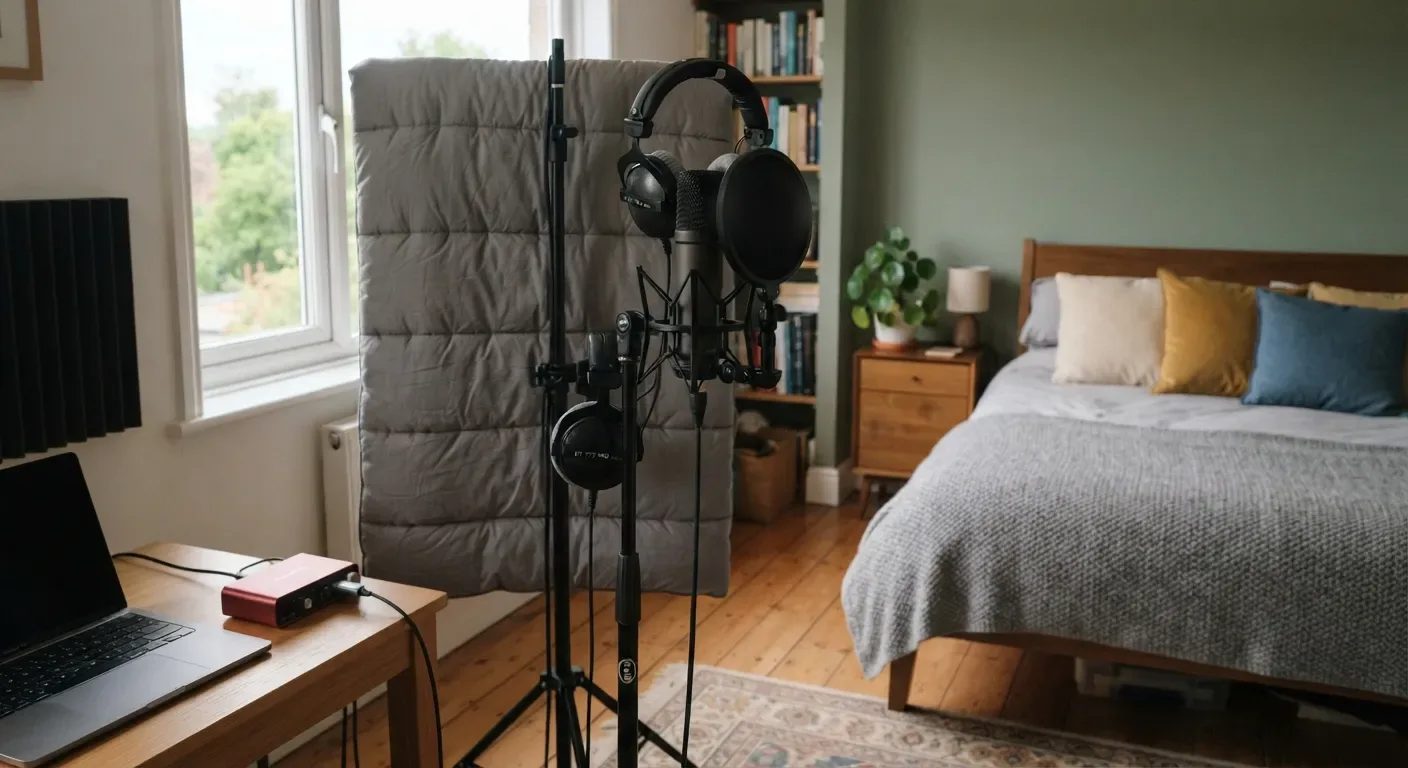
Set it up
- 1Duvet behind youHang it on a stand or a door. A thick one absorbs about as well as flat foam of the same depth (Sound On Sound).
- 2Soft things behind youThe mic hears the wall behind your head more than the one behind itself. Duvet, bed and clothes go there.
- 3Mic, pop filter, distance20–30 cm away with the pop filter between you (Neumann); cardioid with its back to the noise. Closer adds bass.
- 4Away from the windowGlass reflects sound (Genelec) and lets the street in.
- 5Wardrobe doors openRows of clothes are soft and thick, the kind of thing that absorbs.
Why the duvet goes behind the singer: a cardioid mic rejects most at its back (180°), so what it hears besides your voice comes mostly off the wall behind your head (Shure, Sound On Sound). Some guides put the absorber behind the mic instead; it helps too, but the wall behind you comes first. Keep the space right behind the mic clear: even a lyric sheet there changes the tone (Neumann). Levels: Sound On Sound. All checked 2026-10-08. The full guide →
Before you press record
- SoonLiving room
- SoonWardrobe booth
- SoonRehearsal room
- SoonChurch or hall
- SoonOutdoors
- SoonOn stage